Master Cyber Security : Top Secret Courses Hiring Managers Want You to Know with Roadmap
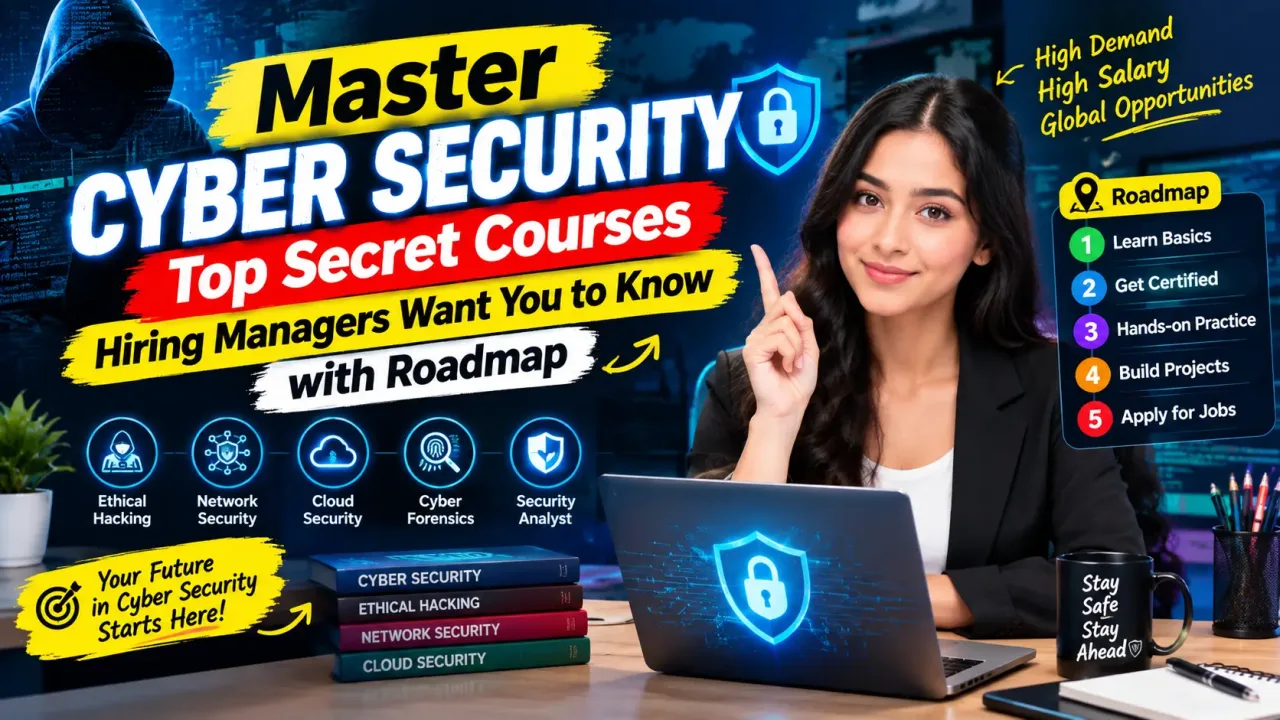
If you've ever typed "best cyber security certification" into Google, you already know the problem. You get flooded with dozens of acronyms — CEH, CISSP, OSCP, Security+, CISM — and every single site swears their pick is "the one that guarantees a job." It's overwhelming, and honestly, a lot of that content is written by people trying to sell you a course, not people who've actually sat across the table from a hiring manager.
So let's cut through the noise. This isn't a list of every certification that exists. It's a roadmap built around what actually gets you hired, based on what's genuinely valued in the industry right now, in 2026.
Why Certifications Alone Won't Get You Hired
Before we even talk about specific courses, let's address the elephant in the room. Certifications are valuable not simply because they improve your resume, but because they help you build structured expertise in a specialized area — but the most successful professionals in 2026 won't rely on credentials alone. They'll combine certifications with practical labs, continuous learning, hands-on projects, and real operational understanding.
This matters enormously because a lot of beginners fall into the trap of collecting certificates like Pokémon cards, hoping quantity will impress recruiters. It won't. What genuinely impresses hiring managers is demonstrated capability — proof you can actually do the job, not just pass a multiple-choice exam about it.
Step One: The Foundational Certification Everyone Should Start With
If you're brand new to cybersecurity, there's a near-universal consensus on where to begin. CompTIA Security+ remains the most widely recognized entry-level certification and frequently appears directly in job requirements, covering foundational concepts like threats, vulnerabilities, security architecture, and incident response.
What makes Security+ genuinely valuable as a starting point is its accessibility — it requires no prior experience, and it's affordable compared to more advanced certifications down the line. It also satisfies specific government compliance requirements, which matters if you're eyeing public sector or defense contractor roles down the road. If money is tight, ISC2's Certified in Cybersecurity credential offers an even more accessible entry point, with free exam vouchers available through their outreach program, making it a genuinely solid stepping stone for career changers or recent graduates without much budget to spare.
Step Two: Choosing Your Specialization Path
Here's where a lot of beginners get stuck — cybersecurity isn't one single career track, it's several distinct paths that require different certifications entirely. Getting this wrong means wasting months and money on credentials that don't actually serve your goals.
If you're drawn to defensive security and threat detection, the natural progression runs from Security+ toward CompTIA CySA+, which builds analytical depth for SOC analyst, threat hunter, or junior incident response roles, before eventually working toward CISSP as you gain more experience.
If offensive security or penetration testing genuinely excites you, the path typically moves from Security+ toward CEH, and then toward OSCP as the serious, hands-on credential that actually matters for mid-level and senior roles. It's worth being upfront here — technical hiring managers dig deeper into practical skills and will often value hands-on certifications like OSCP over CEH specifically for specialized pen testing roles, since OSCP requires you to genuinely compromise real machines during a rigorous 24-hour practical exam, not just answer theoretical questions.
If cloud security is your interest, given how heavily infrastructure has shifted toward cloud platforms, the path generally runs from Security+ through AWS or Azure security certifications, then toward CCSP as you move into architecture-level roles.
If you're aiming toward leadership or governance roles eventually, certifications like CISSP or CISM become relevant, but generally after you've already built genuine hands-on industry exposure — these aren't beginner credentials, and pursuing them too early, before you can actually speak to real experience in an interview, tends to backfire.
The Certification Hiring Managers Actually Respect Most
Here's an honest, slightly uncomfortable truth worth knowing upfront: OSCP remains the most respected hands-on penetration testing certification in the industry, and what makes it different is that you genuinely cannot memorize your way to passing it. That legitimacy is exactly why hiring managers continue weighting it heavily, even as the broader market fills up with countless alphabet-soup certifications that carry far less practical credibility.
Compare that to CEH, which tends to be more theory-based, and while it's still recognized and useful for satisfying certain government compliance requirements, it doesn't carry the same weight with hiring managers evaluating candidates for genuinely technical, hands-on roles.
A Realistic Timeline (Because This Doesn't Happen Overnight)
Let's talk honestly about timing, because unrealistic expectations set people up for frustration. Starting from zero, most people should expect roughly six to twelve months of combined coursework and hands-on lab practice before landing their first entry-level role, typically in the $70,000 to $90,000 range depending on the market and specialization chosen.
If you're specifically aiming for a penetration testing career, expect a longer runway — generally twelve to twenty-four months from zero to landing that first pen test role, since building the underlying technical foundation genuinely takes time before certifications like OSCP even become realistic to attempt. And if leadership roles are your eventual goal, know that credentials like CISM typically require three years of management experience, while CISSP requires five years across multiple security domains — these aren't shortcuts, they're recognitions of experience you'll need to actually build first.
Building Practical Skills Alongside Certifications
This is genuinely the part most beginners skip, and it's the part that separates candidates who get hired from candidates who just collect paper credentials. Free platforms like TryHackMe and HackTheBox offer structured, hands-on labs that let you practice real attack and defense scenarios before you ever sit a formal exam — and candidates without foundational networking and Linux skills should genuinely complete these paths before attempting something like OSCP, to avoid wasting expensive lab time later.
Building small personal projects also helps enormously. Setting up your own home lab, practicing on vulnerable virtual machines, documenting your process in a blog or GitHub repository — these things give you tangible proof of capability that a certificate alone simply can't demonstrate in an interview.
Mistakes That Waste Time and Money
A few honest warnings worth heeding here. Chasing every certification without building real-world skills alongside them offers genuinely poor return on investment — hiring managers can tell the difference between someone who understands the material and someone who simply memorized it for an exam. Similarly, pursuing CEH specifically when you're targeting commercial penetration testing roles, rather than government or compliance-heavy positions, often isn't the smartest use of your money, since OSCP tends to carry far more weight in those specific hiring conversations.
And perhaps most importantly, pursuing senior-level credentials like CISSP before you actually have the experience to speak confidently about it in an interview tends to backfire — hiring managers will ask follow-up questions, and a certificate without genuine understanding behind it becomes obvious very quickly.
Final Thoughts
Mastering cybersecurity isn't about frantically collecting every certification acronym you come across — it's about choosing a deliberate path that matches your actual career goals, building genuine hands-on skills alongside your credentials, and being patient with a timeline that realistically takes months, not weeks. Start with a strong foundational certification like Security+, figure out which specialization genuinely excites you, and then invest your time and money strategically in the credentials that actually matter for that specific path.
The candidates who consistently get hired aren't the ones with the most certificates on their LinkedIn profile — they're the ones who can genuinely demonstrate, through practical skill and real understanding, that they can do the job well. Build that foundation properly, and the right certifications will simply become proof of what you already know how to do.

Read next

Student Loan Forgiveness 2026: Who Qualifies & How to Apply
If you've spent the last year or two feeling like the rules around student loan forgiveness keep changing every time you check your email, you're not imagining it.…

Best Coding Bootcamps vs Computer Science Degree: Which Pays Off Faster?
A few years ago, a friend of mine quit her job as a restaurant manager, spent four months in an intense coding bootcamp, and landed a junior developer…

Regular MBA vs Online MBA vs Distance MBA- which is better?
You've decided to pursue an MBA. Great. Now comes the part nobody warns you about — three different formats, each with passionate defenders online, each claiming to…

How to Get a Scholarship for International Students: 2026 Guide
Picture this: you've just gotten into your dream university abroad. The excitement lasts about five minutes — until you open the fee structure and your stomach…
0 comments